Total Pageviews

Search This Blog

Sunday, December 12, 2021

Requiem for a Restaurant


In the shadow of Hemisfair Tower, at the gateway to the King William neighborhood was El Mirador. The Mexican restaurant was surrounded by mansions abandoned after regular river floods, and later restored, Castroville-style caliche homes, and dollified frame houses, gardens with iron gates and nearly no Saint Augustine lawns such as are popular in other San Antonio neighborhoods. 


The proximity of El Mirador to the King William neighborhood, along with its passable coffee and reliably top-notch food made the restaurant an easy meeting place. That's what any good restaurant can do, but in this case, that was just the start. 


In the morning, the breakfast coffee klatch at El Mirador was called to order by an early rising regular who scanned the paper while listening in on the real news, the neighborhood gossip. "Who shot whose dog?!!" The klatch was a tableau of longtime friends and new ones readily welcomed, chowing down breakfast tacos. Politicos rubbed shoulders with preservationists, journalists listened closely. "Time to go!" 


At noon, tables were crowded by clumps of people curing hang-overs, downtown business owner in suits cooking up the next deal, and artists/writers/creative types musing over crispy tacos or Sopa Azteca. 


At the end of the day, enchiladas, other TexMex comfort foods, (and pitchers of margaritas) healed the wounds of the worker warriors of all the classes. 


Behind the scenes were the Treviño family's long-time cook staff, presided over by Mary (pictured above in early years), Julian and Diana's mother and front-door neighbor, who had learned to cook in Mexico. Mary and her husband ran the restaurant for decades while educating a family. Son Julian, who was a school administrator and later school board member, and his wife Diana, bought a large King William home of their own to restore. That was the kind of magic made at El Mirador. In one generation, hard work and education created prospering families. All from countless homemade tortillas. 


From the parking lot, you entered the spell of El Mirador under a cooling bougainvillea arbor. Banana trees lined the portico. Wooden double doors led you into the Saltillo-tiled low-ceilinged building.  Deep red, yellow and gold walls comforted your sun-blinded eyes.


Waiters in white guayaberas, waitresses in peasant blouses and black skirts, each friendly and prompt, took your order. They were delightfully empowered to bring their own personality's uniqueness to the job. One waiter greeted you like an accomplice to an adventure. One waitress told you about her children's progress in school. Another's twinkling eyes told you this job was a side-gig to her full-time job of making merry over any of La Vida‘s daily deliveries. Bring it on, she seemed to say.


Like any human undertaking, El Mirador wasn't perfect. Unlike its name would suggest, El Mirador didn't have a fabulous vista.  My sister slipped and hurt her back on the sloping tile floors. Yet, a dear friend's mother hosted a birthday party for her there. Mary celebrated her 100th birthday surrounded by long-time customers. 


It was an adjunct home for many of us. I looked forward each week to the bean soup on Friday served with handmade corn or flour. There are memories of cheery exchanges, glances, warm embraces, surrounded by giant prints of Botero and Rivera. Two private dining rooms (one so hidden few knew of it) hosted parties, political organizing and funeral wakes.


I drove by last night and saw El Mirador had been razed to make room for a new Rosario‘s restaurant, (which has its own amazing story). 


In the Mexican food Cielito Lindo heaven I hope to occupy one far-away day, I’ll expect to walk beneath Bougainvilleas and banana trees to see Mary Treviño beyond the kitchen counter, poised on a stool, over-seeing the day's production with her exacting standards for salsas and sofritos. 


I’ll pull up a chair with the coffee klatch bunch and chew the fat over the newspaper, comforted by the hum of people talking and the predictable calling out by the waitstaff, 'hot plate!'

Monday, November 22, 2021

Prayers for the Stolen


As a rule I don't watch horror. The news serves that function these days. But, I remember enjoying scary movies so much as a child. I made Mama stay up with me to watch the late-night horror movie on Saturday nights, hosted on our Laredo TV station by cape-draped Dr. Zekow. He wore red-lined ping pong balls which were cut in half and cupped over his eyes. Dr. Zekow spoke in a Dracula accent. I sat on the floor in front of our black and white set, mesmerized by monsters and regularly peeking behind me for reassurance. My mother mostly ignored me as she read the newspaper. 


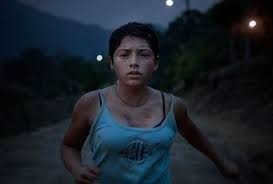
Tatiana Huezo's sensitive and thought provoking film, Prayers for the Stolen, is Mexico‘s feature film entry for  the 2022 Oscars. The beautifully photographed film was not marketed as a horror movie, but it made me as tense and forget-to-breathe-scared as Dr. Zekow's spooky movies. 


The realistic plot of Prayers for the Stolen made the fear nearly unbearable. Black hats abound in the movie. Machines and dynamite blasts chew limestone out of the mountains. Dueling drug cartels extort small farmers and business owners. Children disappear in the dead of night. 


Yet Prayers for the Stolen holds the seed for hope.


The mother daughter story of Rita and 8 year old Ana, later portrayed as a 12 year old, is set in the mountains of  Jalisco state, where the cartels have set up heroin production headquarters.  Rita supports herself and Ana working in the poppy fields. She has few other choices. 


In a haunting scene of unkept promises, villagers attempt to talk with faraway loved ones by cell phone on a hillside were signals are sometimes successful. Rita tries to reach her husband, who's away working in the U.S., but has not sent money to her in two years. His phone rings, but it’s seldom answered.  


The best friends world of three village girls is magical. When Ana and her two friends are very young, they play and explore the countryside freely. They share gossip, explore telepathy and are the same as any girls. As they enter  adolescence, they discover they are in danger.  In this anti-culture, cartel-ruled society, becoming a woman means you are ripe for exploitation. Rita and the village's beauty shop owner know the only way to protect the girls is to make them look like boys. They make up a story about the danger of lice in order to cut the girls' hair short. The girls are heart-broken.


At home, hiding places are prepared for the girls to keep them from being taken by the cartels. A friend from school disappears one night. Ana returns again and again to her lost friend's abandoned home to make sense of her vanished friend. You enter Ana's questioning mind as she surveys her friend's torn-apart home.  


Sounds are important in the story. In a remote place where there is no electronic media available, an expansion of the natural senses is possible. Rita trains her daughter to recognize sounds faraway in the hills. Whose cows are braying from that direction? What kinds of birds are calling? And when the sound of Suburbans speeding on rutted mountain roads is heard, Rita and Ana know the drill. Ana is to leap into her hiding place in the ground, cover herself and keep quiet to escape the cartel.


Rita, Ana's mother does all she can to protect her daughter. She is the story's hero. The other white hat is the town's teacher.  He represents education's greatest gift, the courage to question. His creative and inventive teaching methods bring students more knowledge than a roomful of Internet-equipment computers. He is a ray of hope. Why he and others haven't joined the cartels for better pay is the why of the film. It is the why of who we aspire to be, instead of who we become when we sell our souls to the highest bidder. The teacher's roles is essential to the town's future and that of its inhabitants. 


It is no accident the Prayers for the Stolen struck me so strongly. Mother daughter relationships are to women as a strong trunk is to a tree.  Mama's and my story had many similarities with Rita and Ana's story, though few of the dangers. About ten years after Mama's death at 78 years in 1995, the cartel wars in Mexico began and narcos took over the town in  Tamaulipas in which she was reared. The cartel closed both the town's church and school. My cousins, who were school teachers, and their families were forced to leave their homes. 


Because of how close to home this movie hit me, I'm grateful to the filmmakers for how beautifully it was written, acted, filmed and produced, but I'm most grateful for its message of resilience and hope. 

Saturday, October 2, 2021

History Hologram or Welcome to My Town


I traveled the span of 290 years last night at San Antonio's San Fernando Cathedral.

"San Antonio: The Saga" is a unique-to-San Antonio multimedia installation created by French artist, Xavier de Richemont. The projection of images and music upon the walls of the cathedral is a blend of new and old media which premiered in 2014. The 25 minute art/history video uses images to teach local history in the same way stained glass, statues and oil paintings for centuries have taught the lessons of the Bible. It is shown free of charge at Main Plaza on Tuesday, Friday, Saturday and Sunday at 9:00 p.m., 9:30 p.m. and 10 p.m.  


We watched with a small group of friends sitting on outdoor pillows amid tables of tourists and locals mindfully spaced apart. This was the third time that I had seen the show over the past few years, but last night it seemed like the first time. Blame it on Covid Fog.


The show has surely outgrown the term from the 1960's, "multi media," which calls to mind the mind-bending 360 degree Dome Show about Texas heritages that was a highlight of HemisFair '68. 


"High Resolution Audio Video Animation Digital Projection" is too clunky. While a new word to more accurately describe the show eludes me, I will try my best to describe what the experience of watching "San Antonio: The Saga" evoked.


We watched while partaking the refreshing autumn climate taking us gratefully into a new season. Against the night sky, the facade of the nearly 300 year old cathedral transformed with brightly colored still and moving images. They drifted, flowed, floated and swept in and out of the frame of the night sky, fitting precisely onto the corners and curves of the ornate, hand-carved surface of the three-story structure.  


The images interacted with the physical surface of the cathedral to create a new medium. For kicks, let's call it a History Hologram: The center medallion on the front of the church above the doors became the face of Quanah Parker, Comanche chief. Later we saw the image of Catholic priest and Mexican revolutionary Padre Miguel Hidalgo and then, the United States' President, Abe Lincoln. The Edwards Aquifer was portrayed as springs gushing from each of the Cathedral's windows. It was a tall order for my Covid Fog brain to make sense of each of the images but the audio collage of music helped to guide the passages from one era to another, from the native flute at the start to "Jessica" from the Allman Brothers at the end.  


Viewing the images and music projected onto the cathedral’s façade brought to mind an idea that we were witnessing the birth of a new medium.  Marshall McLuhan wrote extensively about the evolution of media. It was easy to see the arrival of something new, born from the application of high tech digital projection system onto the three-dimensional facade of the limestone structure displaying beautifully curated images and music to tell the story of San Antonio through the centuries.  


There is something in my brain--maybe the same part that, each time while standing at the rim of the Grand Canyon, struggles with the scope and majesty of that natural phenomenon. Similarly, the projection onto San Fernando of color and music was perceived by my eyes, ears and heart as very, very close to real. So close, the mind can temporarily lose any distinctions. It is understandable. The color, sound and size are of such realistic proportion and detail.  They very likely appear just as they would have appeared to anyone walking past the church on the plaza anytime during the past two or three hundred years. Consider, in contrast, the difference in the same representation on a postcard or screen of whatever size, whether still or moving. No contest.


McLuhan might have appreciated the intersection of media and the façade used as an instrument for teaching and transmitting the story of us and our city.


Seeing how the installation was placed on a church, and not a bank or a civic building, I see now that I’ve actually traveled more centuries and than three. In a church, every statue and image has a function and that is to teach a story, a parable, a lesson.  San Antonio: The Saga continues the tradition of teaching a story, now on the exterior of the building. 


Sunday, August 1, 2021

This Changes Everything


Is America a diverse country? 

If so, do on-screen representations in films, televisions and other media reflect this diversity? 

This Changes Everything is a documentary streaming on Netflix about the effort to have more women and people from diverse backgrounds direct films and television programs. It is also about the power of data.

Why are diverse directors important? Voices from the many cultures of our nation translate directly to stories that reflect and include those of marginalized people. This can mean everything to multicultural audiences in our country and to those who watch what we Americans export to the rest of the world.

This Changes Everything is a thorough, detailed, persuasive and illustrative examination of power and how difficult it is to attain power especially when gaining power for one group equals losing power for another group. 


In any discussion of media, power is an important player. In my college communication classes I focused on the power of government, churches and the marketplace of ideas on mediums of mass communication. 


By definition, power is held with strength and is rarely relinquished voluntarily. It is usually held by muscle and by force. 


But this documentary shows that there is also another force that is also an important player: children. Children reside outside of the usual equations of power in media, such as free market v. government imposed regulations, free speech v. limitations and recognition of the importance of representation of women and minorities in media. 


Children can change the equation because they reside in both opposing camps of mainstream media and the those who want to enter and populate mainstream media, folks such as women and people from diverse backgrounds. 


The power of children in the equation is hard to measure because children and their importance transcends that of money or strength. They are the future of our human race and its survival. 


Children are the keepers of our knowledge, our treasure of wisdom. They are the product of humanity, a product more precious than the sum of the rest our other inventions and ideas. 


The documentary shows that the way to fix a problem begins by recognizing that a problem exists. I have seen the debate about on-screen representation of women and minorities waged loudly or quietly for the past 50 years. There are still many in positions of privilege who refuse to recognize that a problem exists. That could be changing with the arrival of research data. Research data now show in hard-to-argue-against numbers that our on screen worlds in fact do not match our in real life in-person worlds. 


Children are influenced by what they see. Children’s on-screen viewing can affect their ideas on how strong or weak, how powerful or powerless they believe themselves to be. 

In the 1960’s, Fred Rogers and the Children’s Television Workshop were both pioneers of an early recognition of the importance of protecting children’s viewing. Those were the days that television used the public airwaves to broadcast programs, so government had a clear and defined role. I was very influenced by my classes at the University of Texas especially my course on children and television taught by Aida Barrera, the producer of Carrascolendas. The PBS program for children which depicted life in small-town South Texas. 


With the advent of cable and the Internet, the public’s airwaves were no longer used in. TVwould become a private industry and with additional deregulation laws our government’s role became less defined. That role is at the heart of current efforts stop regulate internet monopolies. 

The documentary shows recent research data is irrefutable. What children see on-screen is unbalanced and distorted in its representation of gender and diversity. 


The documentary shows the efforts to quantify and bring data into the present day legal argument to balance representation of women and diverse populations and also to fold in the importance of children into the equation. 

That may prove to be the winning formula. 

It gives me hope for progress. 

I have witnessed the decades of struggle to bring change to the massively powerful and lucrative entertainment media industry. The tipping point may be the role of children and the importance of protecting their minds and hearts. 

People in the industry entrenched with profits-uber-alles mentality may think “hey it’s my paycheck! Get out of here with your gender and diversity equality ideas,“ but everyone—however much money they are making—has a stake in children. 


We all share dreams of a better future. If anything can change the course of media misrepresentation it may be the idea of including how misrepresentations detrimentally affects all children.

Equal employment opportunity commission efforts and other legal remedies are truly important drivers, but in the marketplace of ideas putting kids first may be the way to turn the wheel of change in on-screen representation of women and diverse groups forward, faster and further. 


Children’s well-being depends on changing how gender and diversity are shown on screen. 

It is interesting that finally seeing data that measures misrepresentation may be what brings opposing camps finally together to work together.  I look forward to the day the stories we tell are of who we really are and who we can be, instead of who we aren’t. 


Saturday, July 17, 2021

McCartney Series is An Aural Adventure


McCartney 3-2-1 is this Beatles fan’s dream come true.


To hear Paul McCartney talk about the background to some of my favorite Beatles songs is like receiving a letter that the post office lost half a century ago. 

The envelope is faded and stained, but there it is! That is my name on it. 

There are origin stories about songs like Michelle and Sergeant Pepper’s Lonely Hearts Club Band that both surprise and make sense. 


There are interesting connections between the Beatles and other performers from Jimi Hendrix to Ray Roy Orbison and Eric Clapton. 


The Hulu series that premiered July 17 includes archival footage— some that I’ve seen before —but the best part is the series’ fascinating deep dives, complete with audio examples, from separate tracks on Beatles recordings. It’s like looking inside of a diamond and parsing the light beneath the surface.


The wonderful interviewer, Rick Rubin, is the host of the podcast Broken Record. 


Watching the Beatles on the Ed Sullivan TV show in 1964 told me that my life could be better than I could ever imagine. The performance was full-force and unforgettable.  This band’s music transformed me from a glasses-wearing tomboy-bookworm into somebody who found membership in a generation that believed in possibility. 


McCartney 3-2-1 is a gift full of rich details about the music that has been the soundtrack to much of my life. 

Thursday, July 15, 2021

Summer Before Fourth Grade


It was H-O-T hot in Laredo all during the summer, but especially during the dog days of mid August, which my mom called la canicula. 

Time during the summer stretched stiff and slow as a piece of taffy. The last school year seemed so long ago. Now there were endless days of watching TV, riding bikes, and during the cool of the night, sitting on the porch listening to the grown-ups telling stories. 

The new school year‘s arrival was still too distant to warrant any serious consideration. What did occupy my mind and time was the Confederate troop I was a part of (my neighbor’s toy long rifle fueled that historical wandering) and also my travels in outer space, which I explored straddling a rolled-up quilt/saddle atop my dresser, which served excellently as the cockpit of my spaceship. 

I was about to start fourth grade the summer I was allowed by Mama to travel solo on the bus to our town’s library, a place I secretly felt was as wonderful and sacred as any church I knew. The magic was in finally getting to do something on my own. It was thrilling.

I pulled open the doors of the air-conditioned library on the second story of Laredo’s City Hall. I was lucky to feel confident that the public library’s  gatekeepers, two gray-haired Anglo-looking ladies seated behind the checkout counter would approve my entry into such a venerable place.  They looked much like the nuns at school, except for their exposed gray curls and ears. 

For hours I walked slowly scanning titles from both the children’s and adult sections. I loved titles and wanted to grow up to make up my own titles. Was that a job? I took home as many books as I could carry. While waiting for the bus I bought with a spare 25 cents a copy of a tabloid newspaper with photos and a story about an Italian family barbecued and eaten by their madman father. When I got to our stop I left the newspaper on the bus seat on purpose. Mama would not approve of either my buying or reading it.

Trips to the library were my first steps in exercising my imagination into reality. It was my idea to get a library card and also my decision when to go there and when come home. Yes, there were still morning forays into neighboring Yankee territory, and space adventures avoiding asteroids during the hottest part of the day. They didn’t compare with wandering the aisles of fiction and nonfiction at the library. I breathed in the aromas of old colonial furniture polish mixed with paper from new and vintage books, magazines and newspapers. It was more than intoxicating adventure, it was liberating.  I had discovered my agency, true, but equally important was that in simply browsing the titles of hundreds upon hundreds of books I birthed the idea that life, however it unfolded, would be plentiful with stories. I wanted desperately to know how other people lived, what they did and what they thought. 

My stacks of horse biographies and joke books fed my imagination during the summer as much as the nuns did with spelling bees, religion class and long division during the school year. 

At the end of la canicula , a rain shower would fall and remind me that just around the corner was the start of a new school year. Soon Mama would drive us downtown, past the bus stop, newsstand and library for the yearly purchase of a pair of white oxfords. I had little time to miss my dangerous incursions into foreign territories whether Yankee or astral. Summer was like that, there endless and forever, then suddenly over.