Total Pageviews

Search This Blog

Showing posts with label Mexico. Show all posts

Monday, November 22, 2021

Prayers for the Stolen


As a rule I don't watch horror. The news serves that function these days. But, I remember enjoying scary movies so much as a child. I made Mama stay up with me to watch the late-night horror movie on Saturday nights, hosted on our Laredo TV station by cape-draped Dr. Zekow. He wore red-lined ping pong balls which were cut in half and cupped over his eyes. Dr. Zekow spoke in a Dracula accent. I sat on the floor in front of our black and white set, mesmerized by monsters and regularly peeking behind me for reassurance. My mother mostly ignored me as she read the newspaper. 


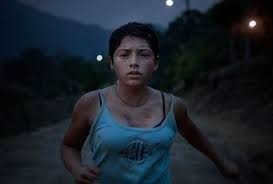
Tatiana Huezo's sensitive and thought provoking film, Prayers for the Stolen, is Mexico‘s feature film entry for  the 2022 Oscars. The beautifully photographed film was not marketed as a horror movie, but it made me as tense and forget-to-breathe-scared as Dr. Zekow's spooky movies. 


The realistic plot of Prayers for the Stolen made the fear nearly unbearable. Black hats abound in the movie. Machines and dynamite blasts chew limestone out of the mountains. Dueling drug cartels extort small farmers and business owners. Children disappear in the dead of night. 


Yet Prayers for the Stolen holds the seed for hope.


The mother daughter story of Rita and 8 year old Ana, later portrayed as a 12 year old, is set in the mountains of  Jalisco state, where the cartels have set up heroin production headquarters.  Rita supports herself and Ana working in the poppy fields. She has few other choices. 


In a haunting scene of unkept promises, villagers attempt to talk with faraway loved ones by cell phone on a hillside were signals are sometimes successful. Rita tries to reach her husband, who's away working in the U.S., but has not sent money to her in two years. His phone rings, but it’s seldom answered.  


The best friends world of three village girls is magical. When Ana and her two friends are very young, they play and explore the countryside freely. They share gossip, explore telepathy and are the same as any girls. As they enter  adolescence, they discover they are in danger.  In this anti-culture, cartel-ruled society, becoming a woman means you are ripe for exploitation. Rita and the village's beauty shop owner know the only way to protect the girls is to make them look like boys. They make up a story about the danger of lice in order to cut the girls' hair short. The girls are heart-broken.


At home, hiding places are prepared for the girls to keep them from being taken by the cartels. A friend from school disappears one night. Ana returns again and again to her lost friend's abandoned home to make sense of her vanished friend. You enter Ana's questioning mind as she surveys her friend's torn-apart home.  


Sounds are important in the story. In a remote place where there is no electronic media available, an expansion of the natural senses is possible. Rita trains her daughter to recognize sounds faraway in the hills. Whose cows are braying from that direction? What kinds of birds are calling? And when the sound of Suburbans speeding on rutted mountain roads is heard, Rita and Ana know the drill. Ana is to leap into her hiding place in the ground, cover herself and keep quiet to escape the cartel.


Rita, Ana's mother does all she can to protect her daughter. She is the story's hero. The other white hat is the town's teacher.  He represents education's greatest gift, the courage to question. His creative and inventive teaching methods bring students more knowledge than a roomful of Internet-equipment computers. He is a ray of hope. Why he and others haven't joined the cartels for better pay is the why of the film. It is the why of who we aspire to be, instead of who we become when we sell our souls to the highest bidder. The teacher's roles is essential to the town's future and that of its inhabitants. 


It is no accident the Prayers for the Stolen struck me so strongly. Mother daughter relationships are to women as a strong trunk is to a tree.  Mama's and my story had many similarities with Rita and Ana's story, though few of the dangers. About ten years after Mama's death at 78 years in 1995, the cartel wars in Mexico began and narcos took over the town in  Tamaulipas in which she was reared. The cartel closed both the town's church and school. My cousins, who were school teachers, and their families were forced to leave their homes. 


Because of how close to home this movie hit me, I'm grateful to the filmmakers for how beautifully it was written, acted, filmed and produced, but I'm most grateful for its message of resilience and hope. 

Saturday, October 2, 2021

History Hologram or Welcome to My Town


I traveled the span of 290 years last night at San Antonio's San Fernando Cathedral.

"San Antonio: The Saga" is a unique-to-San Antonio multimedia installation created by French artist, Xavier de Richemont. The projection of images and music upon the walls of the cathedral is a blend of new and old media which premiered in 2014. The 25 minute art/history video uses images to teach local history in the same way stained glass, statues and oil paintings for centuries have taught the lessons of the Bible. It is shown free of charge at Main Plaza on Tuesday, Friday, Saturday and Sunday at 9:00 p.m., 9:30 p.m. and 10 p.m.  


We watched with a small group of friends sitting on outdoor pillows amid tables of tourists and locals mindfully spaced apart. This was the third time that I had seen the show over the past few years, but last night it seemed like the first time. Blame it on Covid Fog.


The show has surely outgrown the term from the 1960's, "multi media," which calls to mind the mind-bending 360 degree Dome Show about Texas heritages that was a highlight of HemisFair '68. 


"High Resolution Audio Video Animation Digital Projection" is too clunky. While a new word to more accurately describe the show eludes me, I will try my best to describe what the experience of watching "San Antonio: The Saga" evoked.


We watched while partaking the refreshing autumn climate taking us gratefully into a new season. Against the night sky, the facade of the nearly 300 year old cathedral transformed with brightly colored still and moving images. They drifted, flowed, floated and swept in and out of the frame of the night sky, fitting precisely onto the corners and curves of the ornate, hand-carved surface of the three-story structure.  


The images interacted with the physical surface of the cathedral to create a new medium. For kicks, let's call it a History Hologram: The center medallion on the front of the church above the doors became the face of Quanah Parker, Comanche chief. Later we saw the image of Catholic priest and Mexican revolutionary Padre Miguel Hidalgo and then, the United States' President, Abe Lincoln. The Edwards Aquifer was portrayed as springs gushing from each of the Cathedral's windows. It was a tall order for my Covid Fog brain to make sense of each of the images but the audio collage of music helped to guide the passages from one era to another, from the native flute at the start to "Jessica" from the Allman Brothers at the end.  


Viewing the images and music projected onto the cathedral’s façade brought to mind an idea that we were witnessing the birth of a new medium.  Marshall McLuhan wrote extensively about the evolution of media. It was easy to see the arrival of something new, born from the application of high tech digital projection system onto the three-dimensional facade of the limestone structure displaying beautifully curated images and music to tell the story of San Antonio through the centuries.  


There is something in my brain--maybe the same part that, each time while standing at the rim of the Grand Canyon, struggles with the scope and majesty of that natural phenomenon. Similarly, the projection onto San Fernando of color and music was perceived by my eyes, ears and heart as very, very close to real. So close, the mind can temporarily lose any distinctions. It is understandable. The color, sound and size are of such realistic proportion and detail.  They very likely appear just as they would have appeared to anyone walking past the church on the plaza anytime during the past two or three hundred years. Consider, in contrast, the difference in the same representation on a postcard or screen of whatever size, whether still or moving. No contest.


McLuhan might have appreciated the intersection of media and the façade used as an instrument for teaching and transmitting the story of us and our city.


Seeing how the installation was placed on a church, and not a bank or a civic building, I see now that I’ve actually traveled more centuries and than three. In a church, every statue and image has a function and that is to teach a story, a parable, a lesson.  San Antonio: The Saga continues the tradition of teaching a story, now on the exterior of the building. 


Friday, January 25, 2019

Not My Abuelita,But That's What TV Is For


1962 Nueva Ciudad Guerrero, Tamaullipas, Mexico. 

I can imagine my Mexican grandmother, Ventura Molina Flores, so vividly. She was married at 13, had nine children and was fiercely anti-church but a great devotee of the Virgin of Guadalupe. I have a memory from when I was about seven. She stands five feet tall, at her mesquite wood fireplace, cooking our breakfast and uses her bare hands to turn the tortillas she has just made on the blazing hot comal. After breakfast she stands out in her backyard of chickens, pigs, rows of corn and fruit trees watching patiently as my muscle bound teenage brothers try with all their might but fail to cut the mesquite logs for her to use in the fireplace. Nana, which is what we call her, wears her traditional black dress that all widows wore, pale flesh colored cotton stockings and tan cloth shoes that resemble moccasins. She sees the boys have given up chopping and trots out beside the now sweating grandsons and takes the ax.  Next, she expertly chip-chips ting-tings at just the right spots upon the logs to chop them to proper fireplace proportions. All our grand kid eyes are bugged out in surprise.

January 24, 2019, Netflix's "One Day At A Time" Episode 13 "Quinces"

"Quinces" is not the way my coming out would have played out with my abuela. She more than likely would have come after me with her ax instead of sewing me a tux for my quinceañera. The Cuban grandmother character played by Rita Moreno struggles in her three inch dancer's heels to climb her own tall mountain of centuries of her culture's homophobia, but she reaches the top. She chooses her granddaughter over convention.  Many tears of joy, disbelief, and wonder flowed at my house.

Does this only happen on TV? Does TV reflect cultural change or does it spark the change it first shows? Yes, yes and yes in the case of One Day At a Time producer Norman Lear, who has broken at least as many cultural barriers in his nearly 80 years of working in TV as my grandmother chopped mesquite logs.  

God bless all the abuelas as they stand guard protecting their children in the best way they know how.


Sunday, December 11, 2011

Happy Feast Day, Virgen de Guadalupe, We Need You More Than Ever


In villages all across Mexico, high in the mountains, in the desert and in the jungles of the coasts, people awoke this morning to honor the virgencita, Our Lady of Guadalupe. Many are doing the same in the Southwest, in towns and cities.

The thought of this makes me happy inside. I like to imagine the many reasons we are getting up early on her feast day to celebrate. Some of us to give thanks for her help and guidance every day of the year's that's ending. Some of us to pray for a special reason for her protection and care. Some of us to mark the season, the calendar's march forward with a day of worship and thanksgiving; a tradition that repeats without our thinking of it like a heartbeat, a childhood rhyme or story that has become a part of who we are.

Here are the elements: Tonantzin, corn goddess of the Azteca; Juan Diego a peasant traveling to the city for medicine for his ailing grandfather; the apparition of the Virgin on the desert hill at Tepeyac; Juan's refusal to take the Virgin's request for the construction of a church to the bishop; Juan's avoidance of the Virgin; At the third request, Juan accepts her request and carries roses in his tilma to the bishop; the miracle, the tilma transformed from shirt to her delicate image, hands in prayer, standing upon a half moon, drafted into duty to persuade a new nation into Christianity.

Or here is another view. Was the Virgen drafted to emerge yet again?

Was her transformation from Azteca indigenous to Western ideal of beauty simply another way of revealing herself? Of providing us with protection, guidance and hope that fire up our spirits, lead us to do "important work" in the words of Seth Godin?

Have we people in the Americas, and also in Africa, Asia, Europe, the regions of China, India, the Arab world, everywhere we live on this chance planet, stepped forward to mark the end of the seasons for centuries before centuries were counted, to worship our protectors and providers?

Wednesday, June 16, 2010

Excerpt from radio documentary for Texas Public Radio"They are making decisions for us, we don’t have the freedom we want to.”


:05 Two way radio chatter
Linda: That’s audio from a YouTube post of a Mexican TV network report that includes narco gangs’ two-way radio transmissions. Cartel members posted a video on the Internet of the execution of a cartel traitor or “traicionero”. Laredo Morning Times editor, Diana Fuentes:

(Fuentes: Two 10:50 – 10 :55) “They slice his neck. They kill him, and the blood, it’s all sound, it’s there.

(Fuentes: Two 11:00 –11:17) “They’re sawing his head off, and it’s one of the big, big things on You Tube right now. And obviously they’re doing it to terrorize people. You know, who’s going to want to go against these people, they do this kind of stuff.”

(Fuentes: Two 11:22 – 11:45) “They post it themselves, they had to shoot it themselves, they’re the drug dealers, this is not the police, these are the killers, showing what they do to people that they consider traicioneros, and then they post it. It’s interesting how social media is being used by both sides.

Linda:
On the other hand, social media in the hands of citizens are used to fill the gaps left by the silenced traditional news media.
(Arturo and M Engl. 3 0:53 – 0:58) “It was right after we were eating dinner that I came to my Storm, my phone, and I opened the blog and I saw what was going on.” (:05)

Linda:
Although it’s not fact-checked, social media offer real-time information that make up in timeliness what it may lack in traditional journalism standards. A local business woman reached for her smart phone when traffickers set up a blockade within sight on a major street in Nuevo Laredo:

(A. and M. Engl. 3 1:05 – 1:21)
Someone had told that person about it, and immediately they put it on the blog. They were asking on the blog if any one has heard anything else about it.” (:15)

Linda:
Border residents know that by whatever means, and regardless of the source, keeping track of where and when there is violence is vital to preventing becoming a victim of crime.

(High School Girls: 2 16:08 – 16:25)
“If you hear there’s a shooting, you can’t go out. They are making decisions for us, we don’t have the freedom we want to.”

Wednesday, May 19, 2010

We all have plenty of faith, even narco-traficantes


"There is no such thing as a lack of faith. We all have plenty of faith, it's just that we have faith in the wrong things. We have faith in what can't be done rather than what can be done. We have faith in lack rather than abundance but there is no lack of faith. Faith is a law." (Eric Butterworth)

They are back, my friend reports. She's recently traveled by car from Nuevo Laredo to Monterrey. The roadside chapels built by families of a victim of a roadside car accident are back up after being demolished for the visit to the region last year by Hilary Clinton. The shrines were destroyed because they are an embarrassing and frightening reminder of the cultural changes happening in Mexico.

The roadside chapels used to contain plaster cast icons of the accident victim's saint (the saint on whose day the person was born), images of Jesus, the Virgin of Guadalupe, and others, and rows of candles. You would pull off the road on your way to the main highway to Monterrey to light a candle and pray for your safe journey. It was always smoky from the candles, and always warm. There was a place to kneel and pause to pray before your trip. It always felt like a gift from the family who built it in their loved one's memory.

New roadside shrines similar to the old ones but dedicated to a new deity, the cult of death, started being built along the roadways about ten years ago. Inside are statues of a death skeleton dressed in robes like the religious statues, also surrounded by images and candles.

We stopped to see one when we were last in Mexico in December, 2008 between Bustamante and the Colombia bridge outside of Nuevo Laredo. Inside the ramshackle windswept shelter I started to feel sick. It felt like the earth had suddenly begun spinning backwards and I nearly lost my balance, everything seemed upside down in a Mexico that venerated death instead of life. There were broken bottles and such a sadness in the statues crept over me I had to get out. I quickly took some photos to prove to myself this was real and not a nightmare. We drove on to the border without speaking. I wondered what causes the veneration of the dead? What causes someone to abandon faith in eternal life for faith in a short life ending in violence? Was it the desire for power? Is this new, or have there always been those that trade their souls for the short-term? These shrines are a testament to their coming out of the shadows.

In an excellent New Yorker article, Days of the Dead, Alma Guillermoprieto writes about the cult of death and narco-culture of Mexico in a way that illuminates and helps to explains these questions. The section on the cult of death is on page four.

http://www.newyorker.com/reporting/2008/11/10/081110fa_fact_guillermoprieto?currentPage=4

I will add that these new shrines are good in one important way. They force the discussion about the shadow side of faith in Mexico's terrible struggle with poverty, corruption and maintaining against the odds the values that define its cultural trust: supporting and keeping its families together, healthy and strong, for long productive lives rather than short journeys ending in tragedy.