Total Pageviews

Search This Blog

Showing posts with label Tamaulipas. Show all posts

Monday, November 22, 2021

Prayers for the Stolen


As a rule I don't watch horror. The news serves that function these days. But, I remember enjoying scary movies so much as a child. I made Mama stay up with me to watch the late-night horror movie on Saturday nights, hosted on our Laredo TV station by cape-draped Dr. Zekow. He wore red-lined ping pong balls which were cut in half and cupped over his eyes. Dr. Zekow spoke in a Dracula accent. I sat on the floor in front of our black and white set, mesmerized by monsters and regularly peeking behind me for reassurance. My mother mostly ignored me as she read the newspaper. 


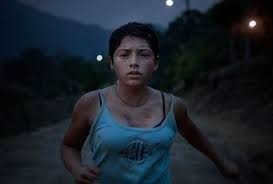
Tatiana Huezo's sensitive and thought provoking film, Prayers for the Stolen, is Mexico‘s feature film entry for  the 2022 Oscars. The beautifully photographed film was not marketed as a horror movie, but it made me as tense and forget-to-breathe-scared as Dr. Zekow's spooky movies. 


The realistic plot of Prayers for the Stolen made the fear nearly unbearable. Black hats abound in the movie. Machines and dynamite blasts chew limestone out of the mountains. Dueling drug cartels extort small farmers and business owners. Children disappear in the dead of night. 


Yet Prayers for the Stolen holds the seed for hope.


The mother daughter story of Rita and 8 year old Ana, later portrayed as a 12 year old, is set in the mountains of  Jalisco state, where the cartels have set up heroin production headquarters.  Rita supports herself and Ana working in the poppy fields. She has few other choices. 


In a haunting scene of unkept promises, villagers attempt to talk with faraway loved ones by cell phone on a hillside were signals are sometimes successful. Rita tries to reach her husband, who's away working in the U.S., but has not sent money to her in two years. His phone rings, but it’s seldom answered.  


The best friends world of three village girls is magical. When Ana and her two friends are very young, they play and explore the countryside freely. They share gossip, explore telepathy and are the same as any girls. As they enter  adolescence, they discover they are in danger.  In this anti-culture, cartel-ruled society, becoming a woman means you are ripe for exploitation. Rita and the village's beauty shop owner know the only way to protect the girls is to make them look like boys. They make up a story about the danger of lice in order to cut the girls' hair short. The girls are heart-broken.


At home, hiding places are prepared for the girls to keep them from being taken by the cartels. A friend from school disappears one night. Ana returns again and again to her lost friend's abandoned home to make sense of her vanished friend. You enter Ana's questioning mind as she surveys her friend's torn-apart home.  


Sounds are important in the story. In a remote place where there is no electronic media available, an expansion of the natural senses is possible. Rita trains her daughter to recognize sounds faraway in the hills. Whose cows are braying from that direction? What kinds of birds are calling? And when the sound of Suburbans speeding on rutted mountain roads is heard, Rita and Ana know the drill. Ana is to leap into her hiding place in the ground, cover herself and keep quiet to escape the cartel.


Rita, Ana's mother does all she can to protect her daughter. She is the story's hero. The other white hat is the town's teacher.  He represents education's greatest gift, the courage to question. His creative and inventive teaching methods bring students more knowledge than a roomful of Internet-equipment computers. He is a ray of hope. Why he and others haven't joined the cartels for better pay is the why of the film. It is the why of who we aspire to be, instead of who we become when we sell our souls to the highest bidder. The teacher's roles is essential to the town's future and that of its inhabitants. 


It is no accident the Prayers for the Stolen struck me so strongly. Mother daughter relationships are to women as a strong trunk is to a tree.  Mama's and my story had many similarities with Rita and Ana's story, though few of the dangers. About ten years after Mama's death at 78 years in 1995, the cartel wars in Mexico began and narcos took over the town in  Tamaulipas in which she was reared. The cartel closed both the town's church and school. My cousins, who were school teachers, and their families were forced to leave their homes. 


Because of how close to home this movie hit me, I'm grateful to the filmmakers for how beautifully it was written, acted, filmed and produced, but I'm most grateful for its message of resilience and hope. 

Friday, January 25, 2019

Not My Abuelita,But That's What TV Is For


1962 Nueva Ciudad Guerrero, Tamaullipas, Mexico. 

I can imagine my Mexican grandmother, Ventura Molina Flores, so vividly. She was married at 13, had nine children and was fiercely anti-church but a great devotee of the Virgin of Guadalupe. I have a memory from when I was about seven. She stands five feet tall, at her mesquite wood fireplace, cooking our breakfast and uses her bare hands to turn the tortillas she has just made on the blazing hot comal. After breakfast she stands out in her backyard of chickens, pigs, rows of corn and fruit trees watching patiently as my muscle bound teenage brothers try with all their might but fail to cut the mesquite logs for her to use in the fireplace. Nana, which is what we call her, wears her traditional black dress that all widows wore, pale flesh colored cotton stockings and tan cloth shoes that resemble moccasins. She sees the boys have given up chopping and trots out beside the now sweating grandsons and takes the ax.  Next, she expertly chip-chips ting-tings at just the right spots upon the logs to chop them to proper fireplace proportions. All our grand kid eyes are bugged out in surprise.

January 24, 2019, Netflix's "One Day At A Time" Episode 13 "Quinces"

"Quinces" is not the way my coming out would have played out with my abuela. She more than likely would have come after me with her ax instead of sewing me a tux for my quinceaƱera. The Cuban grandmother character played by Rita Moreno struggles in her three inch dancer's heels to climb her own tall mountain of centuries of her culture's homophobia, but she reaches the top. She chooses her granddaughter over convention.  Many tears of joy, disbelief, and wonder flowed at my house.

Does this only happen on TV? Does TV reflect cultural change or does it spark the change it first shows? Yes, yes and yes in the case of One Day At a Time producer Norman Lear, who has broken at least as many cultural barriers in his nearly 80 years of working in TV as my grandmother chopped mesquite logs.  

God bless all the abuelas as they stand guard protecting their children in the best way they know how.


Wednesday, June 16, 2010

Excerpt from radio documentary for Texas Public Radio"They are making decisions for us, we don’t have the freedom we want to.”


:05 Two way radio chatter
Linda: That’s audio from a YouTube post of a Mexican TV network report that includes narco gangs’ two-way radio transmissions. Cartel members posted a video on the Internet of the execution of a cartel traitor or “traicionero”. Laredo Morning Times editor, Diana Fuentes:

(Fuentes: Two 10:50 – 10 :55) “They slice his neck. They kill him, and the blood, it’s all sound, it’s there.

(Fuentes: Two 11:00 –11:17) “They’re sawing his head off, and it’s one of the big, big things on You Tube right now. And obviously they’re doing it to terrorize people. You know, who’s going to want to go against these people, they do this kind of stuff.”

(Fuentes: Two 11:22 – 11:45) “They post it themselves, they had to shoot it themselves, they’re the drug dealers, this is not the police, these are the killers, showing what they do to people that they consider traicioneros, and then they post it. It’s interesting how social media is being used by both sides.

Linda:
On the other hand, social media in the hands of citizens are used to fill the gaps left by the silenced traditional news media.
(Arturo and M Engl. 3 0:53 – 0:58) “It was right after we were eating dinner that I came to my Storm, my phone, and I opened the blog and I saw what was going on.” (:05)

Linda:
Although it’s not fact-checked, social media offer real-time information that make up in timeliness what it may lack in traditional journalism standards. A local business woman reached for her smart phone when traffickers set up a blockade within sight on a major street in Nuevo Laredo:

(A. and M. Engl. 3 1:05 – 1:21)
Someone had told that person about it, and immediately they put it on the blog. They were asking on the blog if any one has heard anything else about it.” (:15)

Linda:
Border residents know that by whatever means, and regardless of the source, keeping track of where and when there is violence is vital to preventing becoming a victim of crime.

(High School Girls: 2 16:08 – 16:25)
“If you hear there’s a shooting, you can’t go out. They are making decisions for us, we don’t have the freedom we want to.”