Total Pageviews

Search This Blog

Friday, August 5, 2022

Art Makes A Difference in Agustin Gonzalez, Guajajuato


Today I learned that the word “taco” originated from “tlaco” in the Aztec’s Nahuatl language, I also learned that stone meal grinding tools used to make tortillas, the metate and the mano have also been found in ancient Chinese sites, and that my grandmother’s town in Mexico wasn’t the only one to be buried beneath a dam and a reservoir. 

Whew! That’s a lot. 


We are on a tour offered once a week to benefit residents of a farming village outside San Miguel de Allende. We are visiting three homes.  


The village of Agustin Gonzalez is located less than a half hour from San Miguel de Allende.  The town was built to replace the original town inundated to build a nearby reservoir. That was what happened to my mother‘s hometown of Guerrero Viejo, Tamaulipas when Falcon Reservoir and Dam were built 70 years ago 90 miles south of Laredo. I felt an immediate kinship with the residents of Agustin Gonzalez. 


Decades ago in 1973 the population here existed mainly by farming. Villagers also made clay pots and supplemented their income by selling them in the market of San Miguel. When their village was flooded, clay used for their pottery lay underwater and inaccessible. The clay pot making ended.


Twenty five years ago a group of women, mostly retired Americans, who now lived in San Miguel, set out to help another group of women. These women had sewing and embroidery skills and lived in the village of Agustin Gonzalez. The Americans introduced them to the art of hook rug making. 


American expats organized workshops to teach the local women to make hook rugs, a craft invented in Ireland and adopted in the early U.S. colonies.  It was unknown in Mexico. Today, instead of selling clay pots, the villagers supplement their farming income with the sale of hook rug art at the organic market each week in San Miguel, as well as in galleries in the US. The Otomi women sell the hook rug art they make for much more than they could sell their previous sewn goods. The children of the village can now afford to study beyond tuition-free grade school. Some have gone on to attend university. 


American ex-pats conduct a weekly tour to the village with all proceeds going to the village.  They also organize collection of wool clothing to be shipped from the US for use in the rug making. Here is a wonderful video narrated by our tour guide, Charlotte. 


We are eager to see the hook rug work, but our first stop is at an outdoor kitchen of a home in the village where we are to be served some interesting cooking lessons with our lunch. 


We are shown how locally grown corn kernels are softened with ash and water and then ground on a metate into masa for corn tortillas using no additional ingredients. We are shown an intricately carved wooden stamp with a unique-to-the-family design for decorating the tortillas before they are cooked for special holidays. These are family heirlooms passed from one generation to the next.


We then enjoyed a delicious vegetarian spread (meat is only for special occasions) of beans, potato cakes, chiles rellenos, guacamole and a Central Mexican salad, Xoconostle, made with a sour cactus fruit, chiles, mint and salt.   


Our next stop was another home compound where several related families lived. We watch as melon water was prepared and served to us for a refreshing dessert. Two grade school children, a sister and brother, sing us the Otomi version of the Mexican national anthem. The dry, stacked stonework of the home is a thing to behold. The men of the village work in the U.S. part of the year, returning home with resources to build onto their homes. 


On the last stop of the tour we arrive past two Holsteins munching on hay to the verdant home of Doña Maria, a 90 year-old Otomi grandmother. We also meet her daughter, Bonifacia has been a hook rug maker since the project’s early years. 


Doña Maria may be in the last generation to speak Otomi fluently. Spanish has been adopted as the principal language by many Otomi. We learned some basic terms from a worksheet that our guide, Charlotte shared. 


Doña Maria and her daughters are proud of their hook rug art.  Charlotte points out the vibrant colors and designs we see today came about over time with the workshops offered to hook rug makers on color theory and design. 


I look around at our group and marvel at our group of tourists, of Mexican and American heritages, and at our chance convergence under shade trees at 6500 feet, sharing cooking, languages and stories, all thanks to a group of expat Americans with the will to help lift members of their adopted community, and Mexican farming women willing to learn new skills to help their families’ future.  


Padamojo, Doña Maria.  Thank you, also to to all the hook rug makers of Agustin Gonzalez, and to Charlotte and her team of volunteers who made possible this beautiful and important cross cultural exchange. 


Want to learn more? Visit their website:

www.rughookproject.com

 Rug Hook Project

English: Charlotte US 512 447 2150

Español: Oralia on WhatsApp                   1-52-1-415-101-9966

Tuesday, August 2, 2022

Trying Triumphs


 Imelda Staunton‘s character in the Netflix series Trying has got more than a bee in her bonnet, she has got a beehive in it. 

She buzzes with such force when she walks into a scene in Trying that to call her a scene stealer is to call Picasso a paint-by numbers-copycat. 

Staunton brings such animation and dimension to the nearly burned-out social worker she plays that I feel sorry for the other actors in the scene, fine and capable though they are. 


A friend recommended the series and compared it to Ted Lasso. She was right. 


I would add Trying is even more compelling because it is not about the power-elite  owners, coaches and superstar players that lead a soccer team. 


Trying’s people are the sweaty fans crowded in the cheap seats cheering their hearts out. 


There are the same intelligent writing,  character deep-dives and storylines that reel you in and slowly peel back in struggles and triumphs of the characters we thought we knew, but didn’t. 

They work at non glamorous, everyday jobs. They, their friends and family are flawed, often funny and, like the rest of us, sometimes clueless. They hang, climb and swing perilously on the relationship-jungle-jim of life. They may or may not be fully prepared, but they aim high anyway. What else is life for, anyhow? 


I stand on the sidelines holding my breath for the characters in Trying, that is when I ‘m not laughing out loud or wiping away tears of painful recognition. 


Sunday, July 31, 2022

It’s All About ‘Buenos Dias’


 I looked up from the screen of my cell phone and saw a tall, slender woman with a plate of tacos at the end of my table. 

All the chairs at the table had been moved to other tables at the market. I suspected she was my elder, so I said “Good morning,” and offered her my seat. She declined. In a few moments, a teenaged boy gave up his chair and brought it to her. 

Kathy G. had a mop of tousled white hair and sky blue eyes. She wore a store-bought type peasant blouse and un-bleached cotton slacks over hiking sandals. She came to the organic market this Saturday in San Miguel de Allende to buy a few days’ worth of tacos to eat in the week ahead. “I’m 80 and I don’t cook anymore. I raised two sons!“ The long line of customers at the taco stand, most of them US ex-pats, Canadians and Europeans, meant the tacos there were really popular.

Kathy said that after 16 years of living in Mexico, most of them with her husband, who died two years ago, she was preparing to return to the States. 

As we spoke, I held my cellphone in case Susie texted me from her walk to the art institute nearby.  Kathy pointed at my cell phone. That was the reason she was leaving Mexico. “My cellphone?” I asked .

She nodded and explained people in San Miguel had changed when cell phone use spread like wildfire two years ago. Did she mean how people  in Ireland surprised us 20 years ago when they walked down the street, their arms cocked to their ears, speaking in their outside voices to seemingly no one?

Worse than that. Kathy continued, “Now everyone in San Miguel has one. They all stopped talking to each other. Now they look at their phones all day instead of talking to people. They even do it when they drive.”

Putting the cell phone genie back into its bottle seems unlikely, especially as this genie makes mucho money for its masters by keeping our eyes glued to the next Tik Tok video of a cat or someone who identifies as one.  Resistance to the addictive lure of screens and the next thing to not be missed can seem futile, but I’ll never believe it’s too late.  I’m a teacher, that’s my job.

Years ago, I saw the arrival of the cell phone transform the culture at my college as fast as the arrival of a tiger scatters people off the dance floor.  On my way to class my footsteps echoed in the crowded but hushed hall. Students stood lined up against walls, silent as monks on a retreat, their necks craned forward the better to scan their screens. I missed the usual raucous sounds of chatter and laughter. The pairs and groups of students who talked, shared notes, made friends and flirted as they waited for class to start. Here is where students got to know their classmates and sometimes shared notes, assignments, formed study groups and test -drove ideas about what they learned in our Communication class. 

Now my heels click-clicked noisily past solitary students who wouldn’t notice if someone walked by in their birthday suit. No conversations, be they casual or intentional.  No new friends, no flirting. The corridor felt antiseptic and vaguely sad, like a hospital. 

The cellphone in hand signaled I-am-not-open-to-conversations.   No wonder loneliness is an increasing problem for young people in college today. 

As I walked unnoticed and unacknowledged, I felt my own enthusiasm ebb. Would I be able persuade these students from behind their shields to the necessary task of dropping their guard to play, to risk and to try on new ideas in my class? 

As the use of social media and screen time among us grew, the urgency of teaching media literacy also grew with each new semester. 


Here in Mexico, Kathy was crunched by what cell phones took from the culture. She missed the thing she loved the most about living so long in Mexico, the warmth of its people. To anyone new to Mexico, she offered this advice, which proved she still had hope. “With Mexicans, it’s all about the phrase,  ‘buenos dias,’ ‘good morning.’

Even after the the cell phone body snatchers invaded San Miguel, Kathy believed the local charm is still alive. If you offer anyone in San Miguel a simple ‘buenos dias,’ they will still open up like morning glories in the sun. “It’s all about ‘buenos dias,’ ‘good morning.’ 

Thursday, July 28, 2022

Peanut Butter Penny


 Flying to Mexico on a six week vacation, of course meant bringing along our twenty pound dachshund, Penny. 

At airport security, a helpful guard suggested we put a wad of peanut butter on the roof of Penny‘s mouth to distract and help her with ear pain during takeoffs and landings. 


Luckily we found a peanut butter and jelly sandwich while we waited to board for under $30.


Penny’s carrier is a thing of many zippers, straps and handles. She fits in it the way some of us remember fitting into a girdle: just barely. 


We boarded the full flight and were at our seats while Penny sat in her carrier under the seat in front of us at our feet. 


We soon realized we were facing not her face, but her fanny. We would need to turn her carrier to feed her the sticky rooftop treat. 


The net pouch on the back of the seat facing us hung below the seat. Susie began to slide and push the carrier not noticing when the net got caught on a critical zipper on Penny’s carrier.  With each slide and push that Susie gave to turn the carrier, the zipper opened in equal measure. Suddenly the slide and push became a swoosh. The carrier was empty! Penny wriggled out and off she went among her favorite things in the world, feet! She sniffed and shuffled through three rows of sandals, shoes and boots. 

Meanwhile, we sat stunned and securely strapped in our seats three rows behind. 


Susie leapt out to the aisle as quickly as she could, climbing over the traveler beside her to join passengers in various positions of the inelegant dance of lifting carryons where they’re meant to fit but sometimes don’t.  

Susie spotted in a parting of a sea of legs Penny standing still, looking inquisitively around her. 


Susie picked her up and returned her to her place at our feet. Those around us seemed calm.  After the pandemic and all its attendant surprises a loose dog on a plane didn’t seem like very much to get excited about. She was no snake, after all. We were happy there were no complaints, and Penny was quiet for the rest of the flight proving, even at expensive airport prices, the peanut butter worked.

Sunday, December 12, 2021

Requiem for a Restaurant


In the shadow of Hemisfair Tower, at the gateway to the King William neighborhood was El Mirador. The Mexican restaurant was surrounded by mansions abandoned after regular river floods, and later restored, Castroville-style caliche homes, and dollified frame houses, gardens with iron gates and nearly no Saint Augustine lawns such as are popular in other San Antonio neighborhoods. 


The proximity of El Mirador to the King William neighborhood, along with its passable coffee and reliably top-notch food made the restaurant an easy meeting place. That's what any good restaurant can do, but in this case, that was just the start. 


In the morning, the breakfast coffee klatch at El Mirador was called to order by an early rising regular who scanned the paper while listening in on the real news, the neighborhood gossip. "Who shot whose dog?!!" The klatch was a tableau of longtime friends and new ones readily welcomed, chowing down breakfast tacos. Politicos rubbed shoulders with preservationists, journalists listened closely. "Time to go!" 


At noon, tables were crowded by clumps of people curing hang-overs, downtown business owner in suits cooking up the next deal, and artists/writers/creative types musing over crispy tacos or Sopa Azteca. 


At the end of the day, enchiladas, other TexMex comfort foods, (and pitchers of margaritas) healed the wounds of the worker warriors of all the classes. 


Behind the scenes were the Treviño family's long-time cook staff, presided over by Mary (pictured above in early years), Julian and Diana's mother and front-door neighbor, who had learned to cook in Mexico. Mary and her husband ran the restaurant for decades while educating a family. Son Julian, who was a school administrator and later school board member, and his wife Diana, bought a large King William home of their own to restore. That was the kind of magic made at El Mirador. In one generation, hard work and education created prospering families. All from countless homemade tortillas. 


From the parking lot, you entered the spell of El Mirador under a cooling bougainvillea arbor. Banana trees lined the portico. Wooden double doors led you into the Saltillo-tiled low-ceilinged building.  Deep red, yellow and gold walls comforted your sun-blinded eyes.


Waiters in white guayaberas, waitresses in peasant blouses and black skirts, each friendly and prompt, took your order. They were delightfully empowered to bring their own personality's uniqueness to the job. One waiter greeted you like an accomplice to an adventure. One waitress told you about her children's progress in school. Another's twinkling eyes told you this job was a side-gig to her full-time job of making merry over any of La Vida‘s daily deliveries. Bring it on, she seemed to say.


Like any human undertaking, El Mirador wasn't perfect. Unlike its name would suggest, El Mirador didn't have a fabulous vista.  My sister slipped and hurt her back on the sloping tile floors. Yet, a dear friend's mother hosted a birthday party for her there. Mary celebrated her 100th birthday surrounded by long-time customers. 


It was an adjunct home for many of us. I looked forward each week to the bean soup on Friday served with handmade corn or flour. There are memories of cheery exchanges, glances, warm embraces, surrounded by giant prints of Botero and Rivera. Two private dining rooms (one so hidden few knew of it) hosted parties, political organizing and funeral wakes.


I drove by last night and saw El Mirador had been razed to make room for a new Rosario‘s restaurant, (which has its own amazing story). 


In the Mexican food Cielito Lindo heaven I hope to occupy one far-away day, I’ll expect to walk beneath Bougainvilleas and banana trees to see Mary Treviño beyond the kitchen counter, poised on a stool, over-seeing the day's production with her exacting standards for salsas and sofritos. 


I’ll pull up a chair with the coffee klatch bunch and chew the fat over the newspaper, comforted by the hum of people talking and the predictable calling out by the waitstaff, 'hot plate!'

Monday, November 22, 2021

Prayers for the Stolen


As a rule I don't watch horror. The news serves that function these days. But, I remember enjoying scary movies so much as a child. I made Mama stay up with me to watch the late-night horror movie on Saturday nights, hosted on our Laredo TV station by cape-draped Dr. Zekow. He wore red-lined ping pong balls which were cut in half and cupped over his eyes. Dr. Zekow spoke in a Dracula accent. I sat on the floor in front of our black and white set, mesmerized by monsters and regularly peeking behind me for reassurance. My mother mostly ignored me as she read the newspaper. 


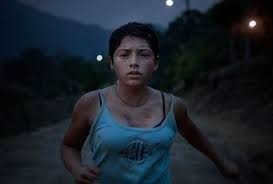
Tatiana Huezo's sensitive and thought provoking film, Prayers for the Stolen, is Mexico‘s feature film entry for  the 2022 Oscars. The beautifully photographed film was not marketed as a horror movie, but it made me as tense and forget-to-breathe-scared as Dr. Zekow's spooky movies. 


The realistic plot of Prayers for the Stolen made the fear nearly unbearable. Black hats abound in the movie. Machines and dynamite blasts chew limestone out of the mountains. Dueling drug cartels extort small farmers and business owners. Children disappear in the dead of night. 


Yet Prayers for the Stolen holds the seed for hope.


The mother daughter story of Rita and 8 year old Ana, later portrayed as a 12 year old, is set in the mountains of  Jalisco state, where the cartels have set up heroin production headquarters.  Rita supports herself and Ana working in the poppy fields. She has few other choices. 


In a haunting scene of unkept promises, villagers attempt to talk with faraway loved ones by cell phone on a hillside were signals are sometimes successful. Rita tries to reach her husband, who's away working in the U.S., but has not sent money to her in two years. His phone rings, but it’s seldom answered.  


The best friends world of three village girls is magical. When Ana and her two friends are very young, they play and explore the countryside freely. They share gossip, explore telepathy and are the same as any girls. As they enter  adolescence, they discover they are in danger.  In this anti-culture, cartel-ruled society, becoming a woman means you are ripe for exploitation. Rita and the village's beauty shop owner know the only way to protect the girls is to make them look like boys. They make up a story about the danger of lice in order to cut the girls' hair short. The girls are heart-broken.


At home, hiding places are prepared for the girls to keep them from being taken by the cartels. A friend from school disappears one night. Ana returns again and again to her lost friend's abandoned home to make sense of her vanished friend. You enter Ana's questioning mind as she surveys her friend's torn-apart home.  


Sounds are important in the story. In a remote place where there is no electronic media available, an expansion of the natural senses is possible. Rita trains her daughter to recognize sounds faraway in the hills. Whose cows are braying from that direction? What kinds of birds are calling? And when the sound of Suburbans speeding on rutted mountain roads is heard, Rita and Ana know the drill. Ana is to leap into her hiding place in the ground, cover herself and keep quiet to escape the cartel.


Rita, Ana's mother does all she can to protect her daughter. She is the story's hero. The other white hat is the town's teacher.  He represents education's greatest gift, the courage to question. His creative and inventive teaching methods bring students more knowledge than a roomful of Internet-equipment computers. He is a ray of hope. Why he and others haven't joined the cartels for better pay is the why of the film. It is the why of who we aspire to be, instead of who we become when we sell our souls to the highest bidder. The teacher's roles is essential to the town's future and that of its inhabitants. 


It is no accident the Prayers for the Stolen struck me so strongly. Mother daughter relationships are to women as a strong trunk is to a tree.  Mama's and my story had many similarities with Rita and Ana's story, though few of the dangers. About ten years after Mama's death at 78 years in 1995, the cartel wars in Mexico began and narcos took over the town in  Tamaulipas in which she was reared. The cartel closed both the town's church and school. My cousins, who were school teachers, and their families were forced to leave their homes. 


Because of how close to home this movie hit me, I'm grateful to the filmmakers for how beautifully it was written, acted, filmed and produced, but I'm most grateful for its message of resilience and hope. 

Saturday, October 2, 2021

History Hologram or Welcome to My Town


I traveled the span of 290 years last night at San Antonio's San Fernando Cathedral.

"San Antonio: The Saga" is a unique-to-San Antonio multimedia installation created by French artist, Xavier de Richemont. The projection of images and music upon the walls of the cathedral is a blend of new and old media which premiered in 2014. The 25 minute art/history video uses images to teach local history in the same way stained glass, statues and oil paintings for centuries have taught the lessons of the Bible. It is shown free of charge at Main Plaza on Tuesday, Friday, Saturday and Sunday at 9:00 p.m., 9:30 p.m. and 10 p.m.  


We watched with a small group of friends sitting on outdoor pillows amid tables of tourists and locals mindfully spaced apart. This was the third time that I had seen the show over the past few years, but last night it seemed like the first time. Blame it on Covid Fog.


The show has surely outgrown the term from the 1960's, "multi media," which calls to mind the mind-bending 360 degree Dome Show about Texas heritages that was a highlight of HemisFair '68. 


"High Resolution Audio Video Animation Digital Projection" is too clunky. While a new word to more accurately describe the show eludes me, I will try my best to describe what the experience of watching "San Antonio: The Saga" evoked.


We watched while partaking the refreshing autumn climate taking us gratefully into a new season. Against the night sky, the facade of the nearly 300 year old cathedral transformed with brightly colored still and moving images. They drifted, flowed, floated and swept in and out of the frame of the night sky, fitting precisely onto the corners and curves of the ornate, hand-carved surface of the three-story structure.  


The images interacted with the physical surface of the cathedral to create a new medium. For kicks, let's call it a History Hologram: The center medallion on the front of the church above the doors became the face of Quanah Parker, Comanche chief. Later we saw the image of Catholic priest and Mexican revolutionary Padre Miguel Hidalgo and then, the United States' President, Abe Lincoln. The Edwards Aquifer was portrayed as springs gushing from each of the Cathedral's windows. It was a tall order for my Covid Fog brain to make sense of each of the images but the audio collage of music helped to guide the passages from one era to another, from the native flute at the start to "Jessica" from the Allman Brothers at the end.  


Viewing the images and music projected onto the cathedral’s façade brought to mind an idea that we were witnessing the birth of a new medium.  Marshall McLuhan wrote extensively about the evolution of media. It was easy to see the arrival of something new, born from the application of high tech digital projection system onto the three-dimensional facade of the limestone structure displaying beautifully curated images and music to tell the story of San Antonio through the centuries.  


There is something in my brain--maybe the same part that, each time while standing at the rim of the Grand Canyon, struggles with the scope and majesty of that natural phenomenon. Similarly, the projection onto San Fernando of color and music was perceived by my eyes, ears and heart as very, very close to real. So close, the mind can temporarily lose any distinctions. It is understandable. The color, sound and size are of such realistic proportion and detail.  They very likely appear just as they would have appeared to anyone walking past the church on the plaza anytime during the past two or three hundred years. Consider, in contrast, the difference in the same representation on a postcard or screen of whatever size, whether still or moving. No contest.


McLuhan might have appreciated the intersection of media and the façade used as an instrument for teaching and transmitting the story of us and our city.


Seeing how the installation was placed on a church, and not a bank or a civic building, I see now that I’ve actually traveled more centuries and than three. In a church, every statue and image has a function and that is to teach a story, a parable, a lesson.  San Antonio: The Saga continues the tradition of teaching a story, now on the exterior of the building.