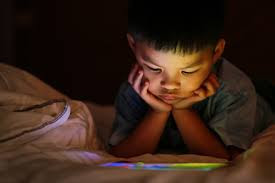
Anyone interested in the well-being of infants and children might wonder how much screen time is too much?
Musings by Linda Cuellar, Ed.D., Community college educator, journalist, video writer and producer who writes and wonders on topics about her life and family, the media, education, border culture, language, travels and U.S. - Mexico issues and topics.
Total Pageviews
Search This Blog
Monday, April 24, 2023
Active Media Use vs. Passive Media Use
Anyone interested in the well-being of infants and children might wonder how much screen time is too much?
Monday, April 3, 2023
Why Study Media Messages?
Thursday, March 16, 2023
Consider Technology's Impacts Over Time, Not By Its Bright and Shiny Attractions
I open a document on the desktop, hear the buzzer on the dryer, jump up and unload and fold clothes, then return to my desk only to notice the unexpected letter announcing my car inspection is now due and I resolve not to be six weeks late, like last year, because it only shortened the time my car's sticker was valid, which was why the notice arrived earlier than I expected.
When disruptive technology comes in it takes a long time to figure out the best way to use it. When the automobile was introduced. It took a while before we figured out traffic rules, and understood that it can’t just be cars going wild through the street.
Which should’ve been evident in hindsight, was to put a small motor in every piece of equipment to better control the machine. Yet, in real life, that actually took 20 or 30 years... history tells us that it will probably take a generation to figure out what the best kind of collaborative cognitive work looks like when we have external computational aids connected by high-speed digital network. "It’s going to take a while.“
With The Bath Water
Saturday, March 4, 2023
Stories R Us
Screen-Time vs. In Real Life (IRL)
Does your tech use help or hurt your relationships?
In a technology-rich culture such as ours, relationships with family, co-workers and friends can suffer when we don’t take the time to know each other in real life (IRL) as deeply as we can. We can easily find ourselves spending more time facing screens than spending face to face time with the people in our lives who we care about most. There's a reason for that. The entire tech, entertainment and e-commerce industries depend on us staying online.
Time flies. Trust erodes. Screens steal. Whether movies, TV, smart phones, tablets or desktops, screens take our attention, make money for someone else and leave our neglected IRL relationships lacking joy, depth and trust.
Stories Produced For Commercial Consumption
True, stories produced by professionals for mass audiences to make a profit are entertaining and amazing. They must be compelling in order to earn what they cost to make! There are teams of engineers who work to keep us engaged, captured and delivered to advertisers.
Stories About Our Lives and Journeys Build Relationships
Our own stories have an even greater value. They are part of how we know ourselves and let others in to know us, too. Storytelling is our heritage as humans. Long before we drew on cave walls or wrote with the first alphabet, we taught and learned by speaking and storytelling.
Stories tell others who we are and what we have learned. They contain the past and the present. They are a gift to the listener and the storyteller, who remembers something important and shares it.
Strengthen Your IRL Connections
There is a great hack for building our IRL relationships, and it is as old as humanity. It is storytelling.
If you’re new to storytelling, here are a few guiding ideas.
1. Start by listening. Ask family members or friends a question only they could answer, such as What was the best meal you’ve ever had? Who was your favorite teacher and why? Story themes can include thought provoking questions such as “Don’t believe everything you think”, or the tell about the time you used your wits to get out of real trouble.
2. Listen to good stories at sites like The Moth. Notice what you like about a story, how it starts, develops and ends. Is there a lesson learned or is a truth revealed?
3. What kind of story do you like to listen to or tell? What gives you a most pleasure or delight? There is no one formula to storytelling. Just as there are many genres in literature, from comedy and romance to suspense and mystery, you get to decide what kinds of stories you prefer telling and how to tell them.
It Was A Dark And Stormy Night
I’ve enjoyed the best stories with family and friends in cars on long drives. The lights are dim, the road hums beneath us, we’re strapped in our seats and we are all ears. There are comfortable silences. One story prompts another person to tell their’s.
Story Telling is Our Human Heritage
One of my most valued theorists and guides in my field of study, Communication studies pioneer, George Gerbner, connects our humanity to stories succinctly.
“Indeed, story is the best word I can find to designate the key feature and most distinctive characteristic of human communication. More than any other, Homo Sapiens is the story-telling animal. Unlike any other, Homo Sapiens lives in a world erected, experiences, and conducted largely through many forms and modes of story-telling.”
Tuesday, February 21, 2023
Pretty Birds, Petticoats and Tex-Mex Magic
At the end of countless winter days without sunshine and multiple windy drama and cold weather tantrums, we are pleased to see the cold scurry back north. Don’t let the screen door hit you on the way out. Any excuse to be outdoors, even at the site of our city’s former waste management system, Mitchell Lake. The 600-acre site is on the south side of San Antonio, no surprise since stuff rolls downhill. Thankfully, our sewage collection is modern and today Mitchell Lake is no longer used for its previous purpose. The Audubon Society and its volunteers operate the site as a refuge for native and migratory birds and for folks like the four of us who enjoy watching them.
Years ago, the site’s various lakes were full, but today the drought has dried up most. There are still two large ponds with plenty of water. That’s where we hiked to watch the water birds. Duck, geese and several other interesting birds, such as the black necked stilt and the yellow-rumped warbler were some identified by my friends using binoculars. Myself, I’m a lazy bird watcher, happy just to be outdoors calling out, “Pretty bird!!” when someone points out somebody flashy in a treetop.
We walked around the pond full of mostly ducks and geese and watched as they bickered with each other, steered on the water like bumper cars at a carnival, and dove underwater, when suddenly -- the sound of our steps-- or maybe it was something internal in the flock, set off an alarm. The entire population airlifted from the water like at the start of a race. Feet paddled and wings batted and a loud, whoosh of wing beats clapped over us in a white thundercloud of feathers. I’ve seen this mass movement of birds before in movies or on TV documentaries set an Africa, but I have never been covered underneath one in real life, nor had I ever heard thousands of rasping, folding, flapping feathers. It was a muffled roar, a crackling wave, much louder than I expected. I craned my neck to follow their collective undulation, a creature the length and width of a football field. All the individual pretty birds became something so big and breathtaking. A whale in flight leaping to a new pond.
The previous day, on a street corner inside the city loop, the line of patrons outside of a Mexican cafĂ© extended to about 15 people, waiting in various levels of eye- blinking surprise at the sun’s warmth. No one watched us through binoculars to my knowledge. That afternoon it had showered over San Antonio and the sun peeked through retreating clouds. It was glorious to be outdoors. We were giddy with excitement over the Tex-Mex lunch that we knew would deliver carbs and comfort in generous quantities.
We met friends there who arrived minutes before we did and held our place in line. We hugged and in the style of people made lonesome by the pandemic’s forced separations, I was approached by a man I didn’t know who stood in line behind me. He appeared to be Anglo, well-groomed and in his mid- seventies. He pointed across the busy street to a young woman on the sidewalk. She walked in a confident stride towards a row restaurants and antique stores. She wore a skirt with, no, I’m not kidding you, multiple petticoats. And she was no square dancer.
“I haven’t seen petticoats since the 1950s!” the man said with true surprise and pleasure. I told him I hadn’t either. But I didn’t tell him that I had not miss petticoats, remembering only the stiff and prickly material biting my tender underside as a child when my mother could still wrestle me inside of such a cage. The line to the restaurant’s front door inched forward. An African American man, mid-50s wearing a derby hat, ambled out of the restaurant onto the sidewalk.
“I regret to inform you that I have eaten all the enchiladas and flour tortillas! There are none left,” he announced, in a lively, theatrical voice.
I raised my eyebrows at him in amused disbelief.
“Oh, is that so?”
In his formal voice he announced, “I’m afraid I ate them all.”
He paused for effect. “There are none left. “
“You’re a storyteller, huh?” I asked.
“A raconteur,” he said. I nodded in agreement.
“You know that’s a storyteller!” His partner, a Mexican American like me rolled her eyes. She, and a teenaged girl waited patiently behind him. This is what a raconteur does, and his family was used to it. ‘We are not amused’ described their expressions.
The Derby hatted gentleman relished having a curbside audience and turned his attention to a pair standing beside us in line, a slender, fit Anglo couple in their mid 60s.
“Haven’t we met before?” the derby hat wearing raconteur asked. The couple stood still.
“Wasn’t it Paris, in ’88? “asked the raconteur. The slender man jumped in feet first. “Why, yes! It was Paris! I was with the CIA then. Deep cover! “
Wife and child gently and expertly pulled the raconteur away.
We giggled at the impromptu performance brought to us courtesy of the warm sun, a break from our collective isolation, or maybe it was just the enchiladas. Beside us two elder hippies, with loads of gray hair, each in hastily made ponytails, their noses deep in yellowed paperback books, did not glance up during this entire intercontinental exchange. Such is the power of a good plot. Or their ability to tune out the world.
We were called into the cafĂ©. Soon we were ushered by a trainee waiter to our table where we ordered enchiladas and fideo loco. The bookish couple were seated by the wall near us. They ate enchiladas and continued reading. The Anglo couple who might or might not have been in Paris in ‘88 sat beside us and chatted quietly. The spell cast upon the sidewalk players in the sunshine was over. I keep hoping that it won’t be the last time I fall like a dime down a sidewalk grill into an alternative reality.
The next day, after birdwatching, I kept thinking about that cloud of feathers above me and how the flock followed a signal to move to a new pond, acting in unison. They, like we, the sidewalk players, stopped in our tracks, noticed the petticoats, laughed at corny jokes, ate our lunches and did what people do who want to be done with a pandemic. We followed a signal, trusted our instincts, our companions, and their chatter. Our identities and histories were set aside, if only for a short time, for the collective comfort of each other’s company.
Saturday, February 11, 2023
Batteries Not Included
I wonder if modifying the phrase can help us improve our communication. "Attention Not Included" may be a way to rethink how we use technology and how we communicate. Without directing our attention, communication doesn't work, either.
About ten years ago, I first noticed the radical change in student behavior in the hallways of my college when smart phones were first adopted.
For decades, college hallways were noisy. While waiting for instructors to unlock classrooms, hallways were filled with students walking by, chatting, standing, sharing notes, making friends and flirting. When smartphones and social media joined the mix, the silence in the usually buzzing hallways was surprising. Instead of interacting, students stood alone, staring at screens in silence. It was spooky. Even spookier is wondering how many lost friendships or romances resulted, or how many drops in grade point averages from notes not shared and study groups not formed?
Inside the classroom, I noticed the number of engaged, attentive faces drop. To the screens in their hands where TikTok or some other shiny and bright site competed with my students’ flash-resistant teacher for their attention.
Over the years I noticed more and more students divide their attention between their smartphones and engagement with class materials or the faces of their fellow students in assigned group activities. As a teacher, I had less to work with, and unbeknownst to them, so did the students.
I missed walking to class in hallways filled with the excitement of the semester's seasons. The shiny beginnings, the friendships formed, the obstacles with schedules, challenging material, work and family overcome.
When they brought their whole selves to the work at hand, it was not uncommon to see students visibly mature in the space of a semester. Some students traveled light years across sixteen weeks, cultivating curiosity, the ability to weather difficulties, conflict and sometimes failure with resilience and an appreciation for learning. When they brought their smart phone tethered to them, there was less of them present.
Technology isn't a good or bad thing. It is only a thing, a tool. What we do with it is what matters. I saw many, me included, adopt smartphones without examining the impact on learning or relationships. The importance of communication that is directed and careful was recently brought home to me by reading a book co-written by the guru of gab, Oprah Winfrey.
Check out this excerpt from the book, What Happened To You?
All of us have had the experience of having a conversation with somebody and feeling dismissed when they disengage to look at their phone. And even though we’re adults and we have developed brains and we understand how the world works, it still feels disrespectful.. It’s bad enough to get that message from someone when you are an adult, just imagine if this is a constant message the baby gets when they are creating their “worldview”: I’m not important. The infant’s capability to be empathic and nurturing—their capacity to love—depends upon the nature, quality, and number of loving interactions they experience early in life. A dismissive, disengaged interaction is not building the foundation for a loving person.
— What Happened to You?: Conversations on Trauma, Resilience, and Healing by Oprah Winfrey, Bruce D. Perry
https://a.co/6a4xQQB
Interested in changing your unexamined media use? Start by examining your own media habits.Try this.
Technology has many up-sides, but its downsides must also be considered. Whether in the college classroom, the conference meeting room or at the family breakfast or dinner table, technology (smart phone in use or even within sight) may hurt communication as easily as it may help.
It's important to remember, in all things media related, we are the product, not the other way around. It's the job of media to capture and sell our attention. Algorithms and teams of engineers work 24/7 to improve their odds of reaching and reselling our attention.
Fortunately, the hack for taking back our time and attention or simply tweaking how we direct our attention is easy, free and available at any time to everyone: Build awareness of how technology affects you and others. Sometimes technology is just what we need, other times, it's exactly what we don't need. Learning when, how and why is worth examining, and offers great promise.
Saturday, January 7, 2023
Dancing Queen
Any day you dance is a good day was a great philosophy I adopted years ago.
Best Spanish dicho: Nadie te quita lo bailado. Rough translation is 'no one can take from you what's already been danced.'
A dear friend, who was once a professional dancer, informed me that the 1950's dance, The Twist, was the dance that released women from men.
Until The Twist, a man's role was to guide and lead a woman in dance. That changed in The Twist, or as my friend put it, "You didn't even need to look at your partner, you were free to dance as you pleased."
Over the years, not looking at your partner graduated to not even needing a partner. Last night at a local dance with the West-side sound pioneering band, The Royal Jesters, another friend reported she watched local dance legend, Teresa Champion, still polishing her steps on the dance floor, dancing without a partner, at the age of 87. The link shares an ARTS segment I wrote and produced for KLRN about Teresa.
I wanna be just like Teresa!!! More dance, more joy, more good days!!!


